Background
Clif Bar is the market leader in its category: meal replacement bars. Clif Bar is best known for its range of natural, healthy, nutritious bars aimed at outdoor adventurers and endurance athletes, such as cyclists, rock climbers, and backpackers. In addition, Clif Bar has expanded into electrolyte replacements, protein bars and drinks for weight trainers, bars geared specifically for women, and a range kids options.
For this demonstration, I tackle the question of how Clif Bar could introduce a new product line to extend its brand without diminishing its standing with current consumers, either by eroding brand values or through over exposure.
Strategy
Clif Bar was founded by a long distance cyclist who was tired of miserably bad trail food. This story, more than a foundational myth, sums up what makes the business work. Staying true to both the needs and the ethos of their core consumer base is central to Clif Bar’s success. Decisions made at the company must take into account how they will fit within that set of values.
Today, the company is driven by five aspirations, structured around the idea of sustainability: sustainability of their business, sustainability of their brand, sustainability of their people, sustainability of their communities, sustainability of the planet. Any brand extension, in addition to being a killer product, must pass these thresholds as well.
In order to be good for their business, the product must tap into a large potential market. In order to be good for their brand, it must stay true to its roots as food for the serious outdoors athlete. In order to be good for their people, its creation must not negatively effect the Clif Bar team and its partners. In order to be good for communities and the planet, it must be made to Clif Bar’s rigorous standards: organic, sustainable ingredients, made with renewable energy, packed in eco-friendly packaging, and delivered by transportation that doesn’t pollute.
The latter three can be accomplished simply by staying within Clif Bar’s existing supply chain and production methods. Using existing flavors and recipes ensures the new product will meet the same standards for people, communities, and the world as existing products. Therefore, I chose to focus on where there was overlap between CPG foods and outdoorsy people, with an eye for foods that could be made using Clif Bar’s existing methods.
This revealed the $1.34 billion market for prepackaged trail snacks, such as specialty nuts, seeds, dried fruits, and trail mixes. These fill a niche untouched by any of Clif Bar’s existing products…
Insight
A 230cal meal replacement bar, or even a 100cal mini bar, doesn’t work for every trip. Not everyone is long distance trail running. Many people who consider themselves outdoorsy people like the social aspect of trail mix, being able to share it with friends, and the ability to graze all day on snack foods.
Idea
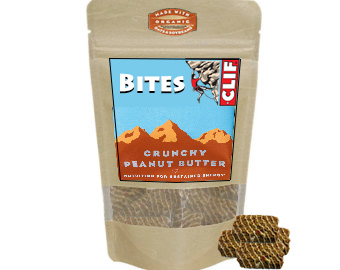
Create a line of bite sized “micro” bars, using existing Clif Bar flavors/recipes, that are designed to tap into the market for easy, snackable trail foods.
New Product Design
The new line of bite sized bars comes in a resealable bag for grab-and-go usage and uses yogurt coating, like the Builder Bar series, to keep the individual pieces from sticking together and eliminate the need for individual wrapping.
Packaging
On The Trail

Being Shared